Evaluating Awaken Design: A Practical Guide to Bold Comic Graffiti Typography
In the realm of digital and print design, selecting a typeface that balances legibility with high-impact personality is often a complex decision. Designers frequently encounter a dichotomy between clean, corporate sans-serifs and chaotic, illegible street-art fonts. Awaken Design emerges as a distinct solution within this spectrum, offering a bold and energetic comic graffiti aesthetic without sacrificing structural integrity. This font is crafted to inject a playful urban vibe into projects ranging from branding campaigns to children's educational materials. For professionals aged 20 to 50 who are evaluating typography options for specific use cases, understanding the unique mechanics, strengths, and limitations of Awaken Design is essential for making an informed choice.
The Core Identity of Awaken Design
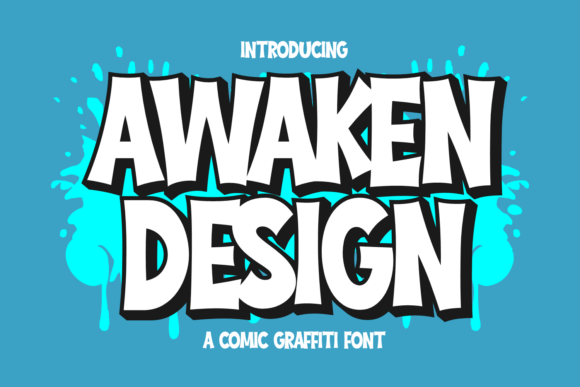
At its foundation, Awaken Design is defined by its chunky letterforms, which utilize exaggerated curves and sharp edges to mimic the expressive strokes found in street art. Unlike many graffiti-inspired fonts that rely on excessive distortion or illegible scribbles, this typeface maintains a polished comic-book appeal. The design philosophy behind it prioritizes confidence and fun, ensuring that the text remains readable even when styled aggressively. This balance is achieved through careful attention to stroke weight and character spacing, allowing the font to function effectively as both a display element and a short-form body text option in specific contexts.
The distinctiveness of Awaken Design lies in its ability to bridge two divergent visual languages: the raw energy of urban spray-paint culture and the structured clarity of traditional comic book lettering. While many "graffiti" fonts lean heavily into the former, often resulting in designs that are difficult to scale or read at smaller sizes, Awaken Design retains enough geometric stability to be versatile. This makes it a compelling alternative for designers who need a font that demands attention but does not compromise on professional presentation.
Understanding the Dual-Style System
A critical feature that sets this typeface apart is its availability in two complementary styles: Regular and Extrude. Understanding the functional differences between these two variations is key to utilizing the font effectively.
- Regular Style: This version offers clean, solid letters that are perfect for standalone use. It provides the core character of the font without additional effects, making it suitable for headers, logos, or situations where the background texture might already provide sufficient visual interest.
- Extrude Style: Layered with a bold outline and a depth effect, this style is designed to create striking dimensional titles. It simulates the look of layered paint or 3D block letters, adding immediate visual weight to a composition.
When combined, these two styles allow for layered, impactful text effects reminiscent of spray-painted tags and comic headlines. This flexibility enables designers to create custom hierarchies without needing external graphic manipulation tools. However, it is important to note that while this combination offers creative freedom, it also requires a disciplined approach to layout to avoid visual clutter.
Comparative Analysis: Where Awaken Design Fits
When comparing Awaken Design to other options in the market, it occupies a specific niche between pure decorative scripts and standard display fonts. Many alternative comic fonts prioritize speed and simplicity, often resulting in thin lines that lack impact on large formats like billboards or posters. Conversely, heavy industrial fonts may offer boldness but lack the organic, hand-drawn feel that defines the graffiti aesthetic. Awaken Design attempts to solve this by providing the thickness required for visibility while retaining the irregularity that suggests human craftsmanship.
In terms of versatility, Awaken Design compares favorably against single-style alternatives. Fonts that only offer a flat version often struggle to stand out in crowded visual environments, such as social media feeds or event posters. The inclusion of the Extrude style gives Awaken Design a competitive edge in scenarios requiring immediate visual hierarchy. However, designers should weigh this against more technical 3D modeling approaches. While the built-in extrusion is efficient, it lacks the dynamic lighting and material properties of true 3D rendering software. Therefore, for hyper-realistic product packaging or cinematic title sequences, a dedicated 3D workflow might still be superior.
Another area of comparison involves readability across different mediums. In the category of street-art inspired typefaces, many options degrade significantly when printed on apparel or small merchandise due to intricate details that clog during production. Awaken Design's chunky forms generally resist this issue better than thinner, more detailed competitors. This makes it a practical choice for screen printing and embroidery, provided the design team adjusts the stroke weights appropriately for the specific fabric or substrate.
Strengths and Tradeoffs in Real-World Application
The primary strength of Awaken Design is its ability to convey a specific mood—fun, creativity, and confidence—instantly. For brands targeting younger demographics or industries centered around entertainment, gaming, and youth culture, this font serves as an effective communication tool. Its energetic nature helps cut through the noise of modern advertising, capturing attention faster than neutral typefaces.
However, there are inherent tradeoffs to consider. The very features that make the font bold can limit its application in formal or minimalist contexts. Using Awaken Design in a corporate annual report or a legal document would likely undermine the seriousness of the content. Furthermore, because the font is so visually loud, it competes with other graphical elements. If a design already contains complex illustrations, vibrant gradients, or busy patterns, adding Awaken Design might result in a chaotic composition that overwhelms the viewer.
Designers must also consider the limitations regarding long-form text. While the Regular style is relatively clean, the exaggerated curves and sharp edges mean that reading large blocks of text can become fatiguing. It is best reserved for headlines, subheads, slogans, and short calls to action. Attempting to set paragraphs in this typeface often leads to reduced comprehension and a disjointed user experience.
Best-Fit Situations and Decision Factors
Determining whether Awaken Design is the right choice depends largely on the project's goals and the target audience. It is an excellent fit for:
- Event Posters and Flyers: Where high contrast and immediate engagement are necessary.
- Apparel Branding: Specifically for t-shirts, hoodies, and caps where a streetwear aesthetic is desired.
- Gaming Interfaces: For UI elements that require a playful, non-threatening tone.
- Children’s Content: Books, apps, and educational materials that benefit from a lively, approachable look.
Conversely, readers should consider alternative options if their project requires extensive body copy, a serious or somber tone, or extreme scalability for micro-text. In these scenarios, a more traditional serif or a geometric sans-serif would serve the content better. Additionally, if the design relies on subtle elegance rather than bold proclamation, the aggressive nature of Awaken Design may feel out of place.
Strategic Implementation for Maximum Impact
To get the most out of Awaken Design, designers should leverage the interplay between the Regular and Extrude styles strategically. Using the Regular style for secondary information and the Extrude style for main titles creates a clear visual hierarchy that guides the reader's eye. This layering technique mimics the depth found in physical street art, adding a tactile quality to digital screens.
Color selection also plays a pivotal role. Because the font has strong outlines and depth, pairing it with high-contrast color palettes enhances its legibility. Pastel backgrounds with dark, saturated text work well to maintain the comic-book feel without losing clarity. Conversely, placing light-colored text on a white background, even with the Extrude effect, can diminish the intended impact.
Ultimately, Awaken Design is a powerful tool for those seeking to infuse their work with urban energy and comic flair. It offers a balanced approach to graffiti typography, avoiding the pitfalls of illegibility while maintaining a distinct personality. By understanding its strengths, recognizing its limitations, and applying it within appropriate contexts, designers can create work that is both visually striking and functionally effective. Whether for a new brand identity or a creative campaign, this typeface provides a robust foundation for projects that demand attention with personality and flair.