Evaluating the Hanimun Font for Design Projects
In the landscape of digital typography, script fonts often occupy a delicate space between legibility and artistic expression. The Hanimun Font is a specific example of this category, designed as a delicate monoline script that prioritizes simplicity and charm. For designers, content creators, and individuals planning personal projects, understanding whether this typeface aligns with their specific visual goals requires a balanced evaluation of its characteristics, limitations, and ideal applications.
Understanding the Hanimun Aesthetic
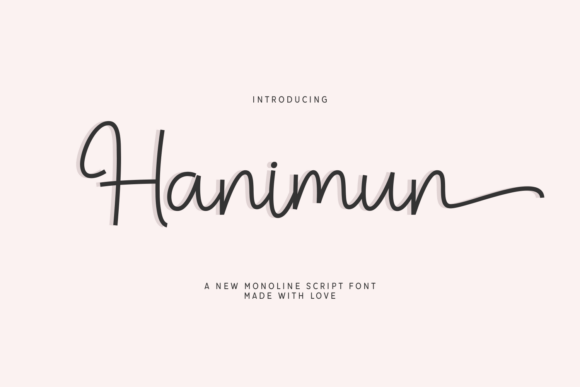
The defining characteristic of the Hanimun Font is its monoline construction. Unlike calligraphic scripts that mimic the varying pressure of a dip pen—creating thick downstrokes and thin upstrokes—monoline scripts maintain a consistent stroke width throughout. This technical choice results in a clean, uniform flow that feels modern yet retains the organic feel of handwriting. The design philosophy behind Hanimun leans heavily into minimalism, stripping away ornate flourishes to focus on the gentle rhythm of the letters themselves.
This approach creates a visual texture that is soft and inviting without being overly decorative. The "handwritten style" mentioned in its description is not meant to replicate a chaotic or rushed note but rather a deliberate, calm script. This makes it distinct from more aggressive brush scripts or highly formal cursive styles. When evaluating Hanimun, one should expect a font that communicates warmth and approachability through restraint rather than complexity.
Reasons to Consider Hanimun for Your Project
There are several practical reasons why a designer might select Hanimun over other script options. The primary driver is often the need for a feminine or soft aesthetic that does not overwhelm the surrounding layout. Because the font is crafted with simplicity, it integrates well into designs where whitespace is a key element. It allows the text to breathe, making it an excellent candidate for projects where the message needs to feel personal but professional.
Key motivations for choosing Hanimun include:
- Minimalist Branding: Brands aiming for a clean, modern identity often struggle to find scripts that do not look dated or cluttered. Hanimun offers a contemporary solution that fits within flat design trends.
- Readability at Small Sizes: While many scripts become illegible when reduced, the open structure and consistent line weight of Hanimun can maintain clarity better than complex alternatives, provided the size remains reasonable.
- Emotional Tone: The font naturally conveys gentleness and sincerity. It is particularly effective for conveying heartfelt messages, such as quotes or short testimonials, where the emotional weight of the words matters more than typographic drama.
Benefits and Tradeoffs
Every typeface involves a set of tradeoffs, and Hanimun is no exception. Its greatest benefit lies in its versatility within specific niches. The monoline style ensures that the font looks consistent across different mediums, from screen displays to print materials, without requiring excessive kerning adjustments to fix uneven spacing caused by varying stroke widths. This consistency can streamline the design process, saving time during the layout phase.
However, there are considerations regarding its limitations. The very simplicity that defines Hanimun can also be a drawback in contexts requiring high impact or authority. A delicate script may lack the visual weight necessary for headlines in bold, industrial, or corporate environments. Furthermore, because it mimics handwriting, extended paragraphs of body text set in Hanimun may fatigue the reader's eye. Script fonts generally demand careful usage; they are best reserved for headings, pull quotes, or short phrases rather than long-form content.
Another consideration is the potential for the font to appear too generic if used without complementary elements. Since the style is minimalist, the success of the design often depends on the pairing with other fonts and the quality of the overall composition. Without strong supporting design choices, Hanimun might fail to distinguish a brand or project from competitors using similar "clean script" aesthetics.
Ideal Applications and Use Cases
The Hanimun Font finds its strongest footing in situations where elegance and intimacy are paramount. It is frequently cited as an ideal choice for minimalist wedding invites. In this context, the font supports a theme of understated luxury, allowing the couple's names and essential details to stand out without competing with heavy borders or intricate patterns. The gentle flow of the letters complements floral arrangements and soft color palettes often found in modern wedding stationery.
Beyond weddings, the font is well-suited for feminine logos, particularly for businesses in the beauty, wellness, lifestyle, and boutique retail sectors. A logo utilizing Hanimun suggests a brand that values care, attention to detail, and a personal touch. Additionally, the font excels in creating heartfelt quotes for social media graphics, blog headers, or motivational posters. In these scenarios, the handwritten nature of the typeface adds a layer of authenticity, making the message feel like it was written directly to the viewer.
When to Consider Alternatives
While Hanimun is effective for specific purposes, it is not a universal solution. There are clear situations where alternative typefaces would serve a project better. If the goal is to convey urgency, strength, or technological innovation, a sans-serif or slab-serif font is likely a superior choice. Similarly, for legal documents, academic papers, or any context requiring strict neutrality and maximum readability over large blocks of text, a standard serif or sans-serif family is necessary.
Designers should also consider alternatives if the project requires a wide range of stylistic variations. As a monoline script, Hanimun has a limited character set compared to full calligraphic families that offer ligatures, swashes, and alternate glyphs. If a design relies heavily on decorative flourishes to create visual interest, Hanimun may feel too plain. In such cases, exploring brush scripts or traditional copperplate styles might provide the dynamic range needed to elevate the design.
Practical Decision-Making Insights
Determining whether Hanimun aligns with your goals requires a methodical approach. Before committing to the font, visualize the final output in its intended environment. Does the delicate nature of the script hold up against the background colors and imagery you plan to use? Test the font in both light and dark modes to ensure contrast remains sufficient.
Consider the hierarchy of your design. Hanimun works best as a focal point for short text. If you find yourself needing to set more than two or three lines of text in this font, it is a signal to switch to a more readable companion font for the body copy. Pairing Hanimun with a clean, geometric sans-serif can create a balanced contrast that leverages the charm of the script while maintaining structural integrity.
Ultimately, the decision to use Hanimun Font should be driven by the message you wish to convey. If your objective is to communicate simplicity, charm, and a personal connection, this typeface offers a reliable tool. However, if your project demands boldness, formality, or extensive readability, looking elsewhere will likely yield better results. By weighing these factors objectively, you can ensure that your typographic choices enhance your design rather than distract from it.