Velloria Font: A Textured Display Typeface for Playful Branding
In the crowded landscape of digital typography, finding a font that balances legibility with genuine character is often a challenge. Many display fonts lean too heavily into decoration, sacrificing readability, while others remain so sterile they fail to capture attention. Velloria Font emerges as a distinct solution in this space, offering a playful display aesthetic grounded in the tactile reality of marker ink on coarse paper. It is not merely a collection of shapes but a deliberate stylistic choice designed to inject energy and approachability into visual communications. For designers, marketers, and content creators looking to break away from the polished uniformity of standard sans-serifs, Velloria provides a textured alternative that feels handcrafted yet remains commercially viable.
The Aesthetic Philosophy of Rough Texture
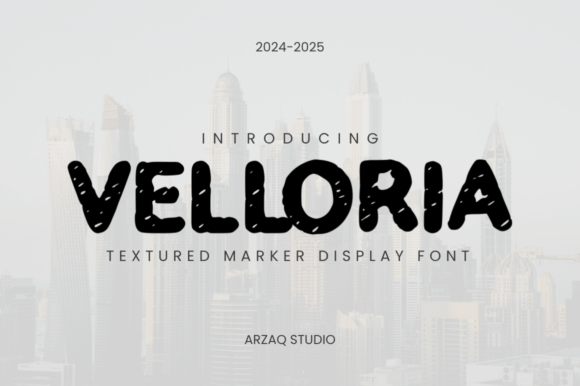
The defining characteristic of Velloria Font is its intentional imperfection. In an era where vector graphics are often mathematically perfect, the human eye craves the irregularities found in analog media. Velloria mimics the look of a felt-tip marker pressed against rough, uncoated stock. This is achieved through a built-in grunge effect that varies slightly across letterforms, creating edges that are soft, uneven, and organic rather than razor-sharp. This texture does more than just add visual noise; it establishes a specific mood. The roughness suggests authenticity, effort, and a lack of corporate detachment.
This textural quality is particularly effective when the goal is to evoke nostalgia or a sense of community. Unlike smooth, geometric fonts that can feel distant or automated, the grainy finish of Velloria invites the viewer closer. It implies that the message was written by a person, not generated by a machine. This psychological cue is powerful in branding contexts where trust and relatability are paramount. The font successfully bridges the gap between professional design and casual expression, allowing brands to maintain high production values while adopting a friendly, accessible voice.
VelloriaDust: Enhancing the Handcrafted Feel
A crucial component of the Velloria family is the inclusion of VelloriaDust. While the primary font handles the structural weight of the letterforms, VelloriaDust serves as a complementary layer that amplifies the textured narrative. It functions as a decorative element or a secondary typeface option that introduces even more grit and variation. When used in conjunction with the main Velloria Font, VelloriaDust allows for dynamic contrast within a single layout. Designers can use the cleaner, bolder strokes of the main font for headlines and employ the dustier variant for subheads, captions, or accent words.
This dual-layer approach offers significant flexibility. It prevents the design from becoming visually monotonous, which is a common pitfall when using highly stylized textures. By varying the intensity of the "dust" or grunge effect, a designer can create depth and hierarchy without relying solely on size or color changes. For example, a snack packaging label might feature the product name in bold Velloria Font for immediate impact, while the flavor description utilizes VelloriaDust to suggest a rustic, homemade quality. This interplay enhances the overall visual appeal and reinforces the brand's story of natural ingredients or artisanal craftsmanship.
Practical Applications in Commercial Design
Understanding the theoretical strengths of Velloria Font is one thing, but evaluating its performance in real-world scenarios is essential for determining its value. The font excels in environments where the target audience responds well to informality and warmth. Its bold, rounded letterforms make it exceptionally suitable for children's designs. Whether applied to educational materials, children's book covers, or toy packaging, the rounded edges eliminate any sense of aggression, creating a safe and inviting atmosphere. The texture adds a layer of playfulness that resonates with young audiences who are drawn to things that look like they were made by hand.
Beyond the juvenile market, Velloria finds robust application in the food and beverage sector, specifically for snack packaging. Consumers often associate rough textures with organic, non-processed, or locally sourced products. A crisp, modern font might imply industrial mass production, whereas Velloria suggests small-batch quality. Marketers can leverage this association to differentiate their products on crowded shelves. The font works particularly well for items like craft sodas, artisanal chips, or bakery goods where the "handmade" narrative is a key selling point. The imperfect charm of the typeface aligns perfectly with the ethos of the maker movement, appealing to consumers who value transparency and authenticity.
Creative projects and personal branding also benefit significantly from this typeface. Freelancers, bloggers, and educators often need to establish a unique visual identity that stands out from the sea of generic templates. Velloria allows these professionals to project a personality that is both competent and approachable. It signals that the creator is confident enough to embrace a style that breaks the rules of traditional typography. For instance, a workshop flyer for a creative writing class or a newsletter header for a lifestyle blog can gain immediate traction when presented in Velloria, as it sets a tone of encouragement and fun.
Evaluating Usability and Technical Performance
While the aesthetic appeal of Velloria Font is clear, its practical utility depends on how well it performs under various technical constraints. One of the primary concerns with textured fonts is legibility at smaller sizes. Because the grunge effect introduces irregularities to the stroke edges, there is a risk that fine details may blur or become indistinct when scaled down. Therefore, Velloria is best utilized as a display font for headlines, logos, and large-format print materials. It is generally not recommended for body copy or long-form reading, where clarity and consistency are critical for user experience.
However, within its intended scope, the font demonstrates remarkable consistency. The variations in texture are randomized in a way that maintains the integrity of each character. A "g" looks distinctly like a "g" despite the rough edges, ensuring that the font remains readable even with its stylistic flourishes. The bold weight of the letterforms further aids in this regard, providing sufficient stroke width to support the texture without causing the letters to collapse visually. This makes Velloria reliable for screen display on high-resolution devices, where the texture renders crisply, and for offset printing, where the ink coverage mimics the intended marker effect effectively.
Flexibility is another strong point. The font supports standard ligatures and alternate characters that allow for customization. Designers can swap certain glyphs to introduce unique stylistic touches to a logo or headline. This level of control ensures that the font can be adapted to fit specific brand guidelines without losing its core identity. Furthermore, the file formats are typically optimized for modern design software, ensuring smooth integration into workflows involving Adobe Illustrator, Photoshop, or web-based design tools. This technical reliability reduces friction during the production phase, allowing creators to focus on composition rather than troubleshooting rendering issues.
Ideal Audience and Strategic Fit
Velloria Font is not a universal solution, and recognizing its limitations is just as important as appreciating its strengths. It is most beneficial for adults aged 20 to 50 who are involved in creative industries, marketing, or small business ownership. These demographics often seek ways to humanize their digital presence and connect with audiences on an emotional level. Entrepreneurs launching lifestyle brands, educators creating engaging curriculum materials, and marketers developing campaigns for family-oriented products will find Velloria to be a strategic asset.
Conversely, the font may not be appropriate for sectors requiring strict formality, such as legal services, financial institutions, or medical reporting. In these contexts, the playful and rough nature of Velloria could undermine the perception of professionalism and precision. The decision to use this font should always be driven by the desired emotional response of the target audience. If the goal is to convey stability, authority, and seriousness, a more traditional serif or clean sans-serif is preferable. However, if the objective is to inspire joy, creativity, or a sense of community, Velloria is a compelling choice.
Long-Term Value and Design Trends
From a long-term perspective, Velloria Font holds enduring value due to the cyclical nature of design trends. While ultra-minimalism has dominated recent years, there is a growing counter-movement toward maximalism, neo-brutalism, and retro-inspired aesthetics that celebrate imperfection. Fonts that mimic analog textures are likely to remain relevant as designers continue to seek ways to combat the homogenization of digital interfaces. Investing in a typeface like Velloria ensures that a brand's visual identity can evolve with these shifting tides without needing a complete overhaul.
Ultimately, Velloria Font represents a thoughtful intersection of art and utility. It offers a distinctive voice for those willing to step outside the boundaries of conventional typography. By combining the friendliness of rounded forms with the authenticity of a marker-on-paper texture, it creates a visual language that is both memorable and functional. For professionals seeking to enhance their projects with a touch of handmade charm, Velloria and its companion VelloriaDust provide a versatile toolkit that delivers consistent results across a variety of creative applications.