B - Book Logo Design: Creative Concepts & Files
The letter B is one of the most versatile characters in typography, offering a unique structural challenge for designers. When paired with the concept of a book, it creates a powerful visual metaphor that resonates instantly with readers, educators, and publishers. A B - Book Logo Design is not merely about placing an icon next to a letter; it is about weaving the narrative of storytelling into the very geometry of the alphabet. Whether you are launching a new publishing house, branding an educational platform, or creating a personal brand as a blogger, this specific design niche offers endless opportunities for creative expression.
At its core, this type of logo relies on the intersection of form and function. The "B" provides a strong vertical anchor, while the open loops or curves within the letter naturally suggest pages, spines, or covers. This duality allows for abstract interpretations that can range from minimalist vector graphics to detailed illustrations. For professionals seeking to establish authority and trust, understanding how to manipulate these elements is essential for effective branding.
The Anatomy of a Letter B and Book Icon
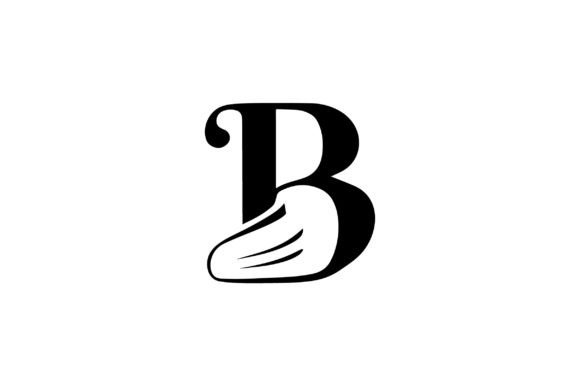
To create a compelling design, one must first deconstruct the components. The capital letter B consists of a straight vertical line and two rounded lobes. In the context of a book logo, the vertical line often represents the spine of a hardcover, providing stability and structure. The two lobes can be reimagined as stacked books, open pages fanning out, or even the front and back covers of a single volume.
This structural flexibility makes the B - Book Logo Design particularly interesting for custom logo designers. Unlike other letters that might require significant alteration to incorporate an object, the B naturally accommodates the shape of a book. You can transform the negative space between the vertical stem and the curves to reveal the silhouette of an open page. Alternatively, the curves themselves can be stylized to look like the rounded corners of a paperback.
When working with alphabet logos, the goal is clarity. The symbol should remain recognizable as the letter B even when scaled down for a social media avatar or embossed on a business card. This requires a balance between the literal representation of a book and the abstract suggestion of reading. Over-complicating the design with too many details can obscure the primary message, leading to a logo that fails to communicate quickly.
Exploring Styles and Creative Directions
The versatility of this concept allows for a wide array of stylistic approaches. Each style serves a different audience and conveys a distinct brand personality.
- Minimalist Vector: This approach focuses on clean lines and geometric precision. By using simple shapes to form the B and the book, the logo becomes timeless and highly scalable. It is ideal for modern tech-driven educational platforms or contemporary publishing houses.
- Abstract Illustration: Here, the designer plays with fluid lines and organic shapes. The book might appear to be melting into the letter, or the pages could flow like water around the vertical stem. This style appeals to creative writers, artists, and indie authors who want to emphasize imagination over rigid structure.
- Classic Serif Typography: Combining a traditional serif font with a subtle book icon embedded in the letter B evokes a sense of history, academia, and reliability. This is perfect for universities, libraries, or established literary agencies.
- Playful and Colorful: For children's book publishers or school-related brands, a bold, colorful interpretation works best. Rounded edges, bright hues, and a friendly font choice make the logo inviting and accessible to younger audiences.
Choosing the right direction depends entirely on your target demographic. A law firm specializing in intellectual property might prefer a stern, black-and-white abstract design, whereas a startup selling audiobooks might opt for a vibrant, dynamic illustration that suggests movement and sound.
Technical Considerations: File Formats and Scalability
Once the creative concept is finalized, the technical execution becomes critical. A professional logo graphic design project must deliver assets in multiple formats to ensure functionality across all mediums. Understanding the difference between raster and vector files is non-negotiable for anyone serious about branding.
For print applications, such as business cards, book covers, or large banners, vector files are the gold standard. Specifically, .EPS (Encapsulated PostScript) and .AI (Adobe Illustrator) files allow the logo to be scaled infinitely without losing quality. These formats preserve the mathematical paths of the design, ensuring that the sharp edges of the letter B and the fine details of the book icon remain crisp regardless of size. If you are working with a custom logo designer, always request these source files to maintain full control over your brand assets.
For digital use, web optimization is key. The .SVG (Scalable Vector Graphics) format is essential for websites. It ensures that the logo loads quickly and looks perfect on high-resolution Retina displays and mobile screens. Unlike raster images, SVGs do not pixelate when zoomed in, making them ideal for responsive web design where the logo might need to stretch or shrink dynamically.
However, not every platform supports vector formats. For social media profiles, email signatures, and general document embedding, high-quality raster images are necessary. A transparent background .PNG file is crucial here, allowing the logo to sit seamlessly on top of various colored backgrounds. Additionally, a high-resolution .JPEG is useful for press kits or situations where a solid white background is required. Having a complete suite of these files—.EPS, .AI, .SVG, .PNG, JPEG—ensures that your B - Book Logo Design is ready for any scenario.
Practical Applications for Different Users
The utility of a well-crafted book logo extends far beyond a simple favicon. Different users can adapt this concept to serve specific goals within their industries.
For Educators and Schools
Schools and educational institutions often use the letter B to represent "Begin," "Build," or "Brain." Integrating a book icon reinforces the mission of literacy and learning. A clean, trustworthy design helps build confidence among parents and students. It can be applied to uniforms, stationery, and digital learning portals, creating a cohesive identity that promotes academic excellence.
For Publishers and Authors
In the competitive world of publishing, a distinctive logo sets a brand apart. For an author, a personalized b logo acts as a signature, appearing on every book cover, website, and promotional material. For a publishing house, it signals genre and tone. A fantasy publisher might choose an ornate, intricate design, while a self-help publisher might opt for something sleek and modern. Consistency in this branding builds recognition and loyalty among readers.
For Entrepreneurs and Marketers
Freelancers and small business owners in the knowledge economy can leverage this imagery to signal expertise. A marketing agency specializing in content creation or a consultancy focused on research can use the book logo to imply depth of knowledge and thoroughness. It serves as a visual shorthand for "we have the answers," helping to attract clients who value informed decision-making.
Maintaining Clarity and Consistency
A successful logo is one that remains effective over time. To achieve this, avoid trends that may date quickly. Instead, focus on fundamental design principles: balance, contrast, and simplicity. Ensure that the relationship between the letter B and the book element is harmonious. Neither should overpower the other; they should work together to tell a unified story.
Consistency is also vital across all touchpoints. Whether the logo appears on a mobile app icon, a billboard, or the corner of a printed page, the colors, proportions, and spacing must remain uniform. Create a brand style guide that dictates how the logo should be used, including minimum sizes, clear space requirements, and approved color palettes. This discipline ensures that your branding efforts are professional and coherent.
Ultimately, a B - Book Logo Design is more than just a graphic; it is a strategic asset. By thoughtfully combining the strength of the alphabet with the universal appeal of literature, you create a symbol that is both memorable and meaningful. Whether you are designing it yourself or collaborating with a professional, focusing on the practical application and technical quality will yield results that stand the test of time.