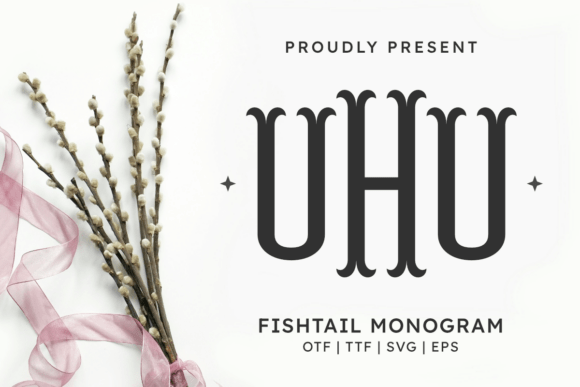
Fishtail Monogram Regular Font: A Practical Evaluation for Creative Projects
In the crowded landscape of digital typography, finding a typeface that balances decorative flair with legibility is often a challenge. The Fishtail Monogram Regular Font has emerged as a distinct option for designers seeking a specific aesthetic without sacrificing usability. Characterized by its unique terminals that mimic the flowing shape of fish tails, this font offers a summer-inspired vibe that stands out in monogram design. However, before integrating it into a workflow, it is essential to understand its structural properties, compare it against other script and display fonts, and evaluate whether it fits the specific requirements of your project.
Understanding the Design Philosophy and Structure
The core appeal of Fishtail Monogram Regular lies in its decorative terminals. Unlike standard serif or sans-serif fonts where letter endings are blunt or simple curves, this typeface extends the strokes of each character into elegant, forked shapes. This design choice draws inspiration from aquatic motifs, specifically the movement of fish tails in warm summer waters. The result is a visual rhythm that feels organic and fluid.
From a technical standpoint, the "Regular" weight indicates a balanced stroke width suitable for medium-sized applications. It is not an ultra-thin hairline script, which can suffer from poor visibility on textured surfaces, nor is it a heavy bold that might lose detail when scaled down. This middle ground makes it versatile for various print-on-demand (POD) items. When evaluating the font's structure, one must consider how these extended tails interact with negative space. In tight kerning scenarios, the tails can create intricate interlocking patterns, which is ideal for logos and emblems but requires careful spacing adjustments to prevent characters from merging unintentionally.
Comparative Analysis: How It Stacks Against Alternatives
When selecting a monogram font, designers often weigh options between traditional calligraphy, modern geometric scripts, and decorative display faces. Fishtail Monogram Regular occupies a niche between ornate vintage styles and contemporary playful scripts. Compared to standard cursive fonts, it offers more structural definition due to the sharp angles of the "tails," providing a slightly more rigid framework while maintaining a soft overall feel.
Consider the difference between using a standard brush script versus Fishtail Monogram Regular for a logo. Brush scripts often rely on variable line weights to simulate hand-painted effects, which can look inconsistent when vectorized for cutting machines like Cricut or Silhouette. In contrast, the consistent stroke weight of Fishtail Monogram Regular ensures cleaner cuts and more predictable results in vinyl projects. However, if a project demands a highly personalized, handwritten look, a true calligraphy font might offer more emotional resonance than the stylized symmetry of the fishtail design.
Another comparison point is readability at small scales. Many decorative monogram fonts become illegible when reduced to the size of a keychain or a sticker. Because the fishtail elements are distinct but not overly complex, they tend to hold up better than fonts with excessive flourishes or ligatures. Yet, compared to a clean sans-serif monogram, it will always be less readable from a distance. This trade-off is crucial for signage or large wall art where clarity is paramount over decoration.
Evaluating Strengths and Tradeoffs
The primary strength of this typeface is its thematic versatility. The aquatic, summery association allows it to fit seamlessly into designs for beachwear, resort branding, or seasonal collections. Its decorative nature adds immediate value to products that require a touch of elegance without appearing overly formal. For instance, on a baby sweatshirt, the playful yet structured look of the font conveys a sense of whimsy that appeals to parents looking for stylish infant wear.
However, there are tradeoffs to consider. The decorative terminals mean that the font requires more horizontal space than a condensed sans-serif. In projects with strict character limits, such as mug handles or narrow tote bag straps, the design may feel cramped unless the text is significantly reduced in size. Additionally, the complexity of the tails can pose challenges for certain laser engraving settings. If the material is prone to charring or burning, the fine points of the tails might not transfer cleanly, requiring adjustments to power and speed settings.
Another limitation is the potential for visual fatigue if used excessively. While striking in a monogram or short quote, the repetitive pattern of the tails can become overwhelming in longer paragraphs. Therefore, it is best utilized as a display font rather than a body text solution. Designers should reserve it for headlines, initials, or short phrases to maintain visual impact.
Ideal Use Cases and Application Scenarios
Determining when to use Fishtail Monogram Regular depends heavily on the end product and the intended audience. For print-on-demand items, this font excels on apparel where the fabric texture complements the organic flow of the letters. T-shirts, sweatshirts, and baby sweats benefit from the font's ability to stand out against cotton or fleece backgrounds. The slight intricacy of the design adds a premium feel to otherwise basic garments.
In the realm of home decor, the font works well for wall art and throw pillows. Here, the decorative elements can be appreciated up close. When designing quotes or inspirational messages for these items, pairing the font with a simpler sans-serif for secondary text creates a balanced hierarchy. For example, a long inspirational quote might use a clean font for the main body, with the first letter or the author's name rendered in Fishtail Monogram Regular to draw the eye.
Crafters utilizing cutting machines will find this font particularly useful for stickers, cards, and custom labels. The clear outlines facilitate weeding—the process of removing excess vinyl—provided the machine blade is sharp and the settings are calibrated correctly. For tumblers and mugs, the font's symmetry ensures that the design looks good even when wrapped around a curved surface, provided the layout is centered effectively.
Decision Factors: Is It the Right Choice?
Before committing to Fishtail Monogram Regular, creators should assess their specific project constraints. If the goal is to convey a message quickly and clearly, such as in safety signage or instructional manuals, this font is likely unsuitable. Its decorative nature prioritizes aesthetics over rapid information processing. Conversely, if the objective is to evoke a feeling of leisure, creativity, or summer warmth, it is a strong contender.
Budget and licensing are also practical considerations. While many designers seek free alternatives, professional-grade fonts like this often come with specific usage rights regarding commercial sales. It is vital to verify the license terms, especially for high-volume POD businesses selling thousands of units. Using a font without the appropriate commercial license can lead to legal complications that outweigh the cost of purchasing a legitimate alternative.
Furthermore, consider the longevity of the trend. Fonts with very specific thematic inspirations, like the fish tail motif, can sometimes feel dated if the trend shifts. While classic monogram styles remain timeless, highly stylized decorative fonts may have a shorter shelf life. For brands aiming for a permanent identity, a more neutral typeface might be safer. However, for seasonal collections or limited-edition runs, the distinctiveness of Fishtail Monogram Regular can be a significant asset.
Practical Implementation Tips
To maximize the effectiveness of this font in creative projects, attention to detail is key. When working with software like Adobe Illustrator or CorelDRAW, ensure that the text is converted to outlines before sending files to printers or cutting machines. This prevents font substitution errors and preserves the integrity of the tail shapes.
Kerning adjustment is another critical step. Due to the extended terminals, default spacing might appear too wide or too tight depending on the specific letter combination. Manually adjusting the space between characters can enhance the flow and ensure that the tails do not collide awkwardly. For logos, experimenting with overlapping the tails can create a unified emblem effect, adding a layer of sophistication to the final design.
Finally, color and texture play a role in how the font is perceived. On dark backgrounds, lighter colors with a slight glow or shadow effect can help define the edges of the tails. On light backgrounds, metallic foils or glitter transfers can accentuate the decorative elements, making the design pop. By carefully considering these variables, designers can leverage the unique qualities of Fishtail Monogram Regular to create compelling, high-quality visuals that resonate with their target audience.