Ordella Sans Serif Display: A Practical Evaluation for Modern Branding
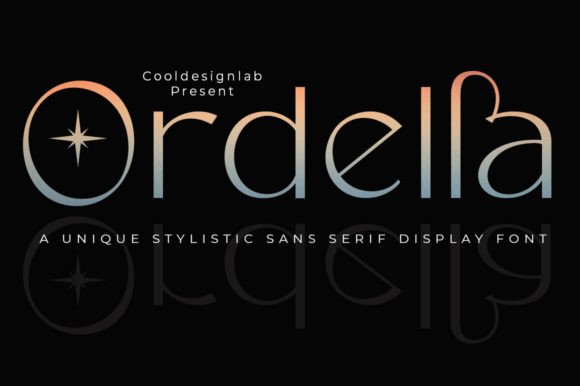
In the crowded landscape of digital typography, finding a typeface that balances contemporary aesthetics with functional versatility is often a challenge. Designers and brand managers frequently oscillate between geometric sans serifs that feel too rigid and humanist fonts that lack distinct character. Ordella emerges as a specific solution within this spectrum, offering a modern sans serif display style packaged with a refined, classy approach. Unlike generic system fonts or overused web standards, Ordella is engineered to provide a luxurious and elegant look through its extensive OpenType features, allowing for deep customization in uppercase variations and ligatures.
For professionals aged 20 to 50 who are evaluating resources for branding projects, understanding where Ordella fits in a design toolkit is crucial. This evaluation explores the distinct characteristics of the font, compares it against broader typographic categories, and outlines the specific scenarios where its unique attributes provide tangible value versus when alternative approaches might be more appropriate.
The Distinctive Architecture of Ordella
At its core, Ordella is a display typeface designed to command attention without sacrificing readability. What sets it apart from standard sans serif families is not merely its shape but its architectural flexibility. The font family includes access to a robust set of OpenType features, which serve as the primary differentiator in the current market. These features allow users to access a large selection of alternative letters and ligatures, moving beyond the static nature of traditional fonts.
The ability to choose letters from variations of uppercase letters is particularly significant for logo design and high-end packaging. In many display fonts, the uppercase forms are uniform, creating a monotonous rhythm. With Ordella, designers can mix and match stylistic alternates to achieve a bespoke feel. This capability transforms a standard text string into a custom graphic element, reducing the need for manual vector manipulation in illustration software. The result is a look that feels both fun and versatile, yet retains a sophisticated edge suitable for luxury markets.
Comparing Ordella to Standard Display Alternatives
When comparing Ordella to other options in the sans serif display category, the trade-offs become clear regarding workflow efficiency and aesthetic output. Many modern alternatives prioritize broad character sets for internationalization or extreme geometric precision, often at the cost of stylistic nuance. For instance, a purely geometric sans serif might offer perfect circles and straight lines, but it often lacks the subtle curves and personality required for an "elegant" brand identity.
Conversely, some script or serif-based display fonts offer elegance but fail to meet the requirements for modern, clean branding. Ordella occupies a middle ground that is increasingly rare. It maintains the structural clarity of a sans serif while introducing the decorative flair usually reserved for more complex typefaces. When evaluating tools for apparel branding or magazine titles, the decision often comes down to whether the project requires a neutral background voice or a statement piece. Ordella is explicitly designed for the latter, making it less suitable for body copy but superior for headlines where impact is the priority.
Feature Depth vs. Simplicity
A critical factor in choosing a font is the depth of its feature set compared to the complexity of the project. Simpler fonts often suffice for quick social media graphics or internal documents, but they fall short when a client demands a unique visual identity. Ordella’s inclusion of ligatures and alternative glyphs addresses this gap. However, this richness introduces a learning curve. Users must understand how to access these OpenType features within their design software to fully leverage the font's potential. If a designer prefers a "set it and forget it" workflow without exploring glyph palettes, a simpler sans serif might be a better fit, even if it offers less visual variety.
Ideal Use Cases and Strategic Applications
The versatility of the Ordella family makes it a strong contender for specific applications where visual hierarchy and brand perception are paramount. Its modern and classy style aligns well with industries that value aesthetics and quality, such as fashion, beauty, and lifestyle sectors.
- Branding Projects and Logo Design: The ability to select specific uppercase variations allows for the creation of logotypes that feel hand-crafted. This is essential for startups and established brands looking to refresh their identity without commissioning a custom letterform from scratch.
- Apparel Branding: On T-shirts and clothing labels, typography often serves as the primary graphic element. Ordella’s bold yet elegant forms ensure legibility at small scales while maintaining impact on larger prints.
- Packaging and Product Labels: Luxury packaging relies on typography to convey value. The font's capacity for a luxurious look helps products stand out on retail shelves, distinguishing them from competitors using generic typefaces.
- Editorial and Advertising: For magazine titles and advertising headers, the font provides the necessary weight and style to grab attention quickly. The fun aspect of the family also allows for creative layouts in postcards and promotional materials.
In these contexts, Ordella acts as a force multiplier for design teams. By providing a wide range of stylistic options within a single file, it streamlines the process of creating cohesive visual systems across various touchpoints.
Evaluating Tradeoffs and Limitations
While Ordella offers significant advantages for display purposes, it is important to recognize its limitations to make an informed decision. As a display font, it is not optimized for extended reading passages. Using Ordella for body text in a long-form article or a book would likely lead to reader fatigue due to its stylized shapes and varying weights. In such cases, pairing Ordella with a highly readable, neutral sans serif for body copy is the recommended approach.
Another consideration is the context of the brand. While the font is described as "fun" and "versatile," its inherent elegance may not suit brands aiming for a rugged, industrial, or ultra-minimalist aesthetic. If a brand's voice is strictly utilitarian, the decorative elements of Ordella might feel out of place. Furthermore, the reliance on OpenType features means that compatibility must be checked across all platforms where the final design will be viewed. While most modern design tools support these features, older systems or certain web rendering environments might default to standard characters if the specific OpenType settings are not properly implemented.
Decision Factors for Selecting Ordella
Choosing the right typeface is rarely about finding the "best" option in isolation; it is about finding the best fit for a specific set of constraints and goals. When deciding whether Ordella is the right choice, consider the following factors:
- Project Scope: Is the project focused on headlines, logos, and short phrases? If yes, Ordella is a strong candidate. If the project involves large blocks of text, look elsewhere.
- Brand Personality: Does the brand need to communicate luxury, elegance, and modernity? Ordella excels here. If the goal is to appear strictly corporate or academic, a more conservative typeface may be preferable.
- Customization Needs: Does the design team require the ability to tweak individual letterforms to create a unique signature? The extensive alternative letters in Ordella support this need effectively.
- Technical Environment: Ensure that the design workflow supports OpenType features. If the team works primarily in environments with limited font support, the full potential of Ordella cannot be realized.
Conclusion on Typography Selection
Ordella Sans Serif Display represents a thoughtful intersection of modern design trends and practical functionality. It offers a solution for designers seeking to elevate their work beyond standard templates by providing a rich palette of stylistic choices within a cohesive family. Its strength lies in its ability to deliver a luxurious and elegant look for branding, packaging, and advertising without requiring the time investment of custom lettering.
However, like any tool, it is not a universal fix. It requires a strategic approach to application, specifically avoiding use in long-form text and ensuring compatibility with the technical environment. For adults and professionals navigating the complex decisions of brand identity, Ordella stands out as a valuable resource when the goal is to create a memorable, high-impact visual presence. By weighing its unique features against the specific needs of a project, designers can determine if this versatile family is the missing piece in their typographic toolkit.