Overlight: A Strategic Asset for Modern Brand Communication
In the crowded digital landscape, typography is rarely just about aesthetics; it is a functional tool for communication and positioning. Overlight represents a specific intersection of modern design and human connection, offering a handwritten style that feels both approachable and meticulously crafted. For entrepreneurs, marketers, and creators aged 20 to 50, selecting the right typeface is a decision that impacts brand perception, user engagement, and the overall clarity of your message. Overlight is not merely a decorative element; when deployed with intent, it becomes a strategic asset capable of enhancing the emotional resonance of your content while maintaining professional standards.
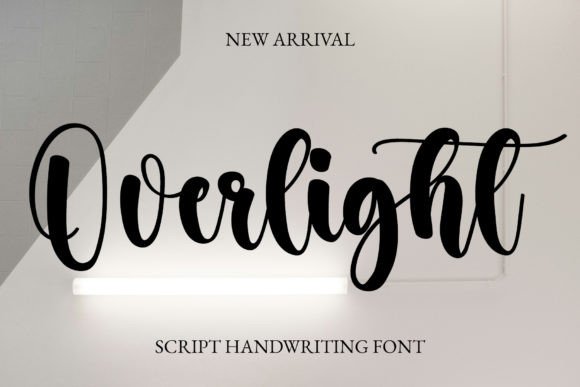
The value of Overlight lies in its balance. It avoids the chaotic informality often associated with script fonts while steering clear of the rigid sterility of standard sans-serifs. This font is neatly crafted and highly detailed, providing a texture that suggests care and attention. In an era where audiences are increasingly skeptical of mass-produced content, the subtle imperfections inherent in a high-quality handwritten font like Overlight can signal authenticity. This is particularly relevant for small business owners and freelancers who need to establish trust quickly without relying on massive advertising budgets.
The Psychology of Handwritten Typography in Professional Contexts
Understanding why Overlight works requires looking beyond the visual shape of the letters. Handwritten fonts trigger a psychological response related to personal interaction. When a reader encounters text that mimics handwriting, they subconsciously associate it with a human author rather than a faceless corporation. For educators, bloggers, and publishers, this association can lower the barrier to entry for complex topics, making the information feel more accessible and digestible.
However, the effectiveness of this strategy depends entirely on execution. Overlight succeeds because it is designed with legibility in mind. Many script fonts fail in professional settings because they prioritize style over readability, causing the audience to strain to decipher the message. Overlight's neat construction ensures that even at smaller sizes or in longer paragraphs, the text remains clear. This allows professionals to use the font for headers, pull quotes, and short body copy without sacrificing the user experience. The result is a communication channel that feels warm yet remains efficient.
Aligning Font Choice with Brand Positioning
Strategic branding is about consistency and alignment. If your brand positioning revolves around innovation, speed, and efficiency, a heavy, blocky sans-serif might be appropriate. However, if your value proposition centers on creativity, personalized service, or artisanal quality, Overlight offers a distinct advantage. It signals that your work is thoughtful and crafted by hand. This is crucial for hobbyists turning into professionals, as well as established brands looking to humanize their customer experience.
Consider the context of your industry. In the wellness sector, education, or creative services, the "friendly" nature of Overlight can reinforce the idea of support and guidance. Conversely, in high-stakes financial reporting or legal documentation, the same font might undermine authority if used incorrectly. The key is to view Overlight as a component of a broader visual system. It should complement your color palette, imagery, and tone of voice, rather than standing alone as a stylistic gimmick. Decision-makers must evaluate whether the personality of the font matches the core values of the organization before integrating it into their library.
Practical Applications and Operational Efficiency
Integrating Overlight into your workflow requires a practical approach to ensure it delivers results. The font's versatility allows it to serve multiple functions across different media, from social media graphics to printed stationery. For marketers, this means creating cohesive campaigns where the typography reinforces the message at every touchpoint. For example, using Overlight for call-to-action buttons or headline accents can draw attention and encourage clicks by breaking the monotony of standard web typography.
Productivity is also a factor when choosing a font. A font that is difficult to pair with other elements or hard to read can slow down the design process and frustrate the end-user. Overlight's clean lines and consistent weight make it easy to integrate into existing design systems. Designers and content creators can spend less time adjusting kerning and spacing, allowing them to focus on the strategic aspects of the project. This operational efficiency translates to faster turnaround times and more resources available for high-level planning and content creation.
- Social Media Campaigns: Use Overlight for overlay text on images to create a sense of personal endorsement or behind-the-scenes insight.
- Editorial Design: Apply the font to chapter headings or sidebar notes in e-books and reports to break up dense text and add visual interest.
- Packaging and Merchandise: Leverage the friendly aesthetic for product labels, stickers, or apparel to convey a handmade or boutique quality.
- Internal Communications: Utilize the font in internal newsletters or welcome packets to foster a culture of warmth and approachability within the team.
Decision-Making Framework for Typography
Before committing to Overlight for a major project, it is essential to run a quick audit against your current goals. Ask yourself what specific outcome you are trying to achieve. Is the goal to increase trust? To highlight creativity? Or simply to differentiate your brand from competitors? If the answer is yes to these points, Overlight is a strong candidate. However, if your primary objective is to convey absolute neutrality or industrial strength, this font may not be the optimal choice.
Another critical consideration is scalability. How will Overlight look on a mobile screen versus a billboard? While the font is detailed, ensuring that those details remain visible at very small scales is vital for digital accessibility. Testing the font in various environments before finalizing a design system is a non-negotiable step in the planning process. This proactive approach prevents costly redesigns later and ensures that the font supports long-term growth rather than becoming a liability as the brand expands.
Risks of Unintentional Usage and Mitigation Strategies
While Overlight offers significant benefits, there are risks associated with its misuse. The most common pitfall is overuse. Because the font is so detailed and expressive, using it for large blocks of body text can lead to visual fatigue. Readers may find it difficult to scan long passages written entirely in a script style, which can hurt retention rates and SEO performance if users bounce quickly. To mitigate this, restrict the use of Overlight to headlines, subheads, and accent text, pairing it with a neutral, highly legible sans-serif for the main body content.
Another risk is inconsistency. Using Overlight sporadically across different platforms without a clear guideline can confuse the audience and dilute brand identity. One day the brand looks professional and structured; the next, it appears casual and disjointed. To avoid this, establish a style guide that dictates exactly when and how Overlight should be applied. Define the hierarchy clearly: specify point sizes, line heights, and color pairings. This discipline ensures that the font serves as a reliable anchor for your brand rather than a source of confusion.
Furthermore, context matters immensely. A font that works perfectly for a wedding planner's website might feel out of place on a cybersecurity firm's landing page. Without a clear understanding of your target audience's expectations, the "friendly" nature of Overlight could be misinterpreted as unprofessional or lacking seriousness. Always test your design choices with a segment of your actual audience to gauge their reaction. Their feedback will provide the necessary data to validate whether the font is achieving the intended strategic goals.
Long-Term Value and Future-Proofing Your Design Library
Investing in a high-quality font like Overlight is a decision with long-term implications. Unlike trendy graphic elements that fade quickly, a well-crafted typeface has the potential to remain relevant for years. Its modern yet timeless aesthetic ensures that it does not date rapidly, protecting your brand from the need for frequent rebranding exercises. This stability is valuable for businesses looking to build equity over time.
Moreover, having a versatile font in your library empowers your team to experiment and iterate without starting from scratch. Whether you are launching a new product line, entering a new market, or refreshing your digital presence, Overlight provides a consistent visual language that ties everything together. This continuity builds recognition and familiarity, which are key drivers of customer loyalty. By treating typography as a strategic resource rather than a cosmetic afterthought, you position your organization for sustained success.
Ultimately, the decision to use Overlight should be driven by a clear vision of what you want to communicate. It is a tool for enhancing creativity, improving communication, and strengthening your brand's connection with its audience. When used thoughtfully and intentionally, it transforms from a simple collection of characters into a powerful driver of results. As you plan your next project, consider how this font can align with your objectives and elevate the quality of your output. With careful planning and strategic application, Overlight will prove to be a wonderful asset to your font library, capable of enhancing any creation with precision and personality.