Rose Geometric: A Modern Typography Evaluation
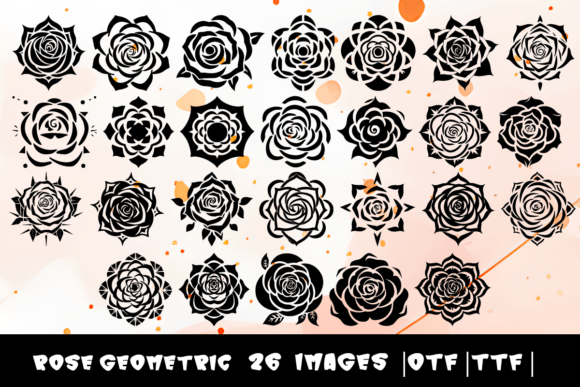
In the landscape of digital design, where trends shift with alarming speed, finding a typeface that balances aesthetic appeal with functional versatility is a constant challenge. Rose Geometric emerges as a notable contender in this space, offering a distinct approach to decorative typography. Unlike traditional serif or sans-serif fonts that rely on structural weight alone, this collection integrates organic floral motifs within a rigid geometric framework. The result is a set of 26 dingbat characters, spanning from A to Z, designed to inject a contemporary, stylized element into visual projects without sacrificing readability or professional polish.
The core premise of Rose Geometric is straightforward yet effective: it replaces standard letterforms with intricate illustrations where each character is constructed around a central rose motif. This is not merely a texture applied over text; the geometry of the letters and the petals of the roses are interwoven to create a unified glyph. For designers seeking to move away from generic stock imagery or overused script fonts, this collection provides a structured alternative that maintains a sense of elegance while adhering to modern minimalist principles.
Design Philosophy and Visual Characteristics
The visual identity of Rose Geometric is defined by its adherence to geometric precision. Each letter is built upon a grid system, ensuring that despite the organic nature of the rose elements, the overall alignment remains consistent. This is crucial for dingbat fonts, which can often suffer from uneven spacing or varying stroke widths that disrupt the flow of a layout. In this collection, the stems of the letters act as the thorns or branches of the rose, creating a seamless transition between the typographic function and the illustrative decoration.
What distinguishes this font from similar offerings in the market is the level of detail maintained at smaller sizes. Many decorative fonts become illegible blobs when scaled down for social media icons or mobile interfaces. However, the lines in Rose Geometric are calibrated to retain their definition even at reduced dimensions. The contrast between the sharp angles of the geometric shapes and the soft curves of the petals creates a dynamic tension that catches the eye without overwhelming the viewer. This balance makes it particularly suitable for branding exercises where a logo needs to communicate both sophistication and creativity.
Technical Specifications and Compatibility
From a technical standpoint, the utility of a font is determined by its file formats and software compatibility. Rose Geometric is distributed in both OpenType (OTF) and TrueType Font (TTF) formats. This dual-format availability is a significant advantage for professionals working across different operating systems and design ecosystems. Whether you are using Adobe Illustrator, Photoshop, InDesign, or web-based tools like Canva and Figma, these files ensure that the glyphs render correctly without the need for complex workarounds.
The OTF format, in particular, offers superior hinting and advanced typographic features, which can be beneficial for high-resolution print production. It ensures that the intricate details of the rose motifs remain crisp on offset presses or large-format displays. Conversely, the TTF version provides robust support for older systems and specific web embedding scenarios. For freelancers and small business owners who may not have access to the latest creative cloud suites, this flexibility removes potential barriers to entry, allowing the font to be integrated into existing workflows immediately.
Performance in Real-World Applications
Evaluating the practical application of Rose Geometric requires looking beyond the sample sheet to see how it performs in actual design scenarios. Its primary strength lies in its ability to serve as a focal point. Because each letter is essentially a standalone illustration, the font works exceptionally well for short-form content. It is ideal for monograms, single-word logos, headlines, and decorative headers where the individual characters can breathe.
However, like most dingbat collections, it has limitations regarding body copy. Attempting to use Rose Geometric for paragraphs of text would likely result in visual clutter and poor legibility. The density of the rose motifs means that kerning becomes a critical factor; too much space between letters breaks the visual connection, while too little causes the designs to merge into an indistinct mass. Therefore, the font is best utilized sparingly, acting as an accent rather than the foundation of a typographic hierarchy.
Consider a wedding invitation suite or a boutique skincare brand. In these contexts, the font can be used to highlight key names, dates, or product categories. The geometric structure allows it to pair effectively with clean, minimal sans-serif fonts for supporting text, creating a balanced composition where the decorative element stands out without dominating the entire page. This versatility makes it a valuable asset for graphic designers who need to convey a specific mood—romantic yet modern—quickly and efficiently.
Target Audience and Use Cases
Rose Geometric appeals to a diverse range of creators, but it holds particular value for those working in lifestyle, fashion, and event industries. Entrepreneurs launching new brands often struggle to find unique visual identities that do not feel cliché. This font offers a solution for those looking to establish a brand voice that feels curated and thoughtful. For instance, a florist, a jewelry designer, or a luxury candle maker could leverage these dingbats to create packaging labels that immediately communicate the quality and aesthetic of their products.
Freelance designers and marketers will also find practical value in this collection. When client briefs call for "something elegant but fresh," Rose Geometric provides a ready-made asset that saves hours of custom illustration time. Instead of drawing a logo from scratch, a designer can manipulate these pre-existing glyphs, adjusting weights or combining them with other elements to create a bespoke look. This efficiency is invaluable in fast-paced agency environments where turnaround times are tight.
Furthermore, educators and publishers exploring thematic content might utilize the font for chapter headings or section dividers in digital publications. The geometric nature of the design lends itself well to educational materials that require a touch of visual interest without distracting from the core content. By using the font selectively, publishers can enhance the user experience and break up dense text blocks with visually engaging anchors.
Limitations and Strategic Considerations
While Rose Geometric offers significant creative potential, it is essential to approach its usage with strategic intent. One limitation is the lack of lowercase variants or extended character sets. Since the collection consists only of uppercase letters A through Z, it cannot be used for sentences requiring mixed case. This restricts its application to all-caps headlines or acronyms. Designers must plan their layouts accordingly, ensuring that the surrounding typography compensates for this constraint.
Additionally, the intricate nature of the design means that it may not reproduce well in very low-fidelity contexts, such as small-scale embroidery or dark-mode web interfaces with insufficient contrast. In such cases, the fine details of the rose petals might get lost, diminishing the impact of the design. It is advisable to test the font in the intended medium before finalizing a project to ensure the details remain visible and impactful.
Another consideration is the risk of overuse. Because the font is so distinctive, applying it to multiple elements within a single design can quickly become overwhelming. The principle of restraint is key here. Using Rose Geometric for a single headline or a signature mark allows it to shine, whereas spreading it across a poster or website header can dilute its effectiveness and make the design appear busy.
Long-Term Value and Workflow Integration
Investing in high-quality digital assets like Rose Geometric contributes to the long-term efficiency of a design workflow. Once installed, the font becomes a permanent part of a designer's toolkit, available for future projects without additional cost. This consistency is vital for brand management, where maintaining a cohesive visual language across various touchpoints is essential. Having a reliable decorative font on hand ensures that ad-hoc requests for "special" text can be fulfilled quickly without compromising on quality.
Moreover, the timeless nature of geometric design suggests that this font will not date quickly. While floral trends come and go, the fusion of geometry and organic forms has remained a staple in design history. This longevity adds to the value proposition, making it a safe choice for clients concerned about the enduring relevance of their branding. As digital platforms evolve, the adaptability of OTF and TTF formats ensures that the font remains usable across new devices and software updates.
Ultimately, Rose Geometric represents a practical solution for designers seeking to elevate their work with a touch of sophisticated flair. It bridges the gap between functional typography and artistic illustration, offering a resource that is both versatile and specific. By understanding its strengths, limitations, and ideal applications, professionals can integrate this font into their projects with confidence, creating designs that are not only visually striking but also strategically sound.