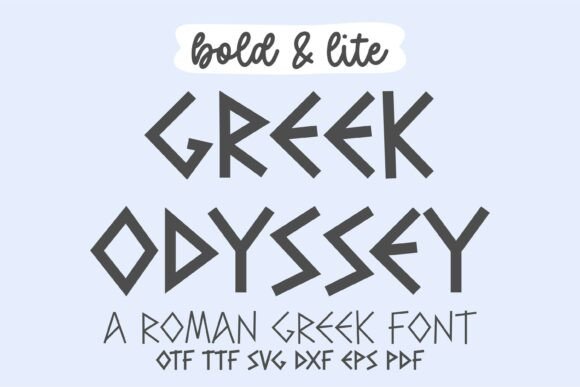
Evaluating the Greek Odyssey Typeface for Design Projects
The selection of a typeface is one of the most critical decisions in any design workflow, influencing readability, brand perception, and overall aesthetic cohesion. Among the various options available to designers, the Greek Odyssey font has emerged as a distinct choice for those seeking a blend of classical structure and modern utility. This Roman Greek-inspired typeface is characterized by assertive, geometric letterforms that evoke the imagery of Grecian columns and marble sculptures. However, before integrating it into a project, it is essential to evaluate its specific characteristics, versatility, and suitability against other design requirements.
Understanding the Design Philosophy
The Greek Odyssey font is not merely a decorative script; it is a structured display typeface rooted in historical architecture. Its primary design language relies on strong verticals and balanced proportions, mimicking the symmetry found in ancient Greek temples. The texture of the typeface aims to convey a sense of permanence and sophistication. Unlike serif fonts that prioritize flow or sans-serif fonts that prioritize neutrality, Greek Odyssey occupies a niche where historic character meets contemporary geometric precision.
This font family typically includes two primary weights: Bold and Lite. The Bold style offers a potent statement suitable for headlines and titles where impact is required. Conversely, the Lite style provides a more restrained elegance, allowing for subtlety without losing the distinctive structural identity of the face. Understanding these variations is crucial for determining how the font will perform across different visual hierarchies within a layout.
Key Benefits and Functional Advantages
For designers looking to infuse a project with a sense of timeless appeal, Greek Odyssey offers several functional advantages. The meticulous crafting of each character ensures that readability is maintained even when the font is used for larger text blocks or prominent headers. The inclusion of standard uppercase and lowercase letters, numbers, punctuation, symbols, and alternates expands its utility beyond simple titles.
A significant benefit lies in its multilingual support. In an increasingly globalized market, the ability to handle a wide array of languages allows designers to create consistent branding materials for diverse audiences. Furthermore, the font's compatibility with major design software enhances its practicality. It integrates smoothly with industry-standard tools such as Adobe Photoshop, Illustrator, Canva, Procreate, and cutting machines like Cricut and Silhouette. This broad compatibility means that users can access the font in various formats, including OTF, TTF, SVG, DXF, EPS, and PDF, ensuring adaptability across both print and digital channels.
Ideal Use Cases
Determining the right context for Greek Odyssey is vital for maximizing its effectiveness. Given its architectural inspiration, it is particularly well-suited for projects that require a tone of authority, luxury, or heritage.
- Fashion Branding: The geometric yet elegant nature of the font makes it a strong candidate for fashion line logos and packaging, where a balance of modernity and classicism is often desired.
- Event Invitations: For romantic wedding invitations or high-end gala events, the Lite weight can provide a sophisticated backdrop that feels exclusive without being overly ornate.
- Educational Materials: Insightful educational content regarding history, art, or architecture benefits from the font's thematic connection to antiquity, reinforcing the subject matter visually.
- Poster Designs: When a poster requires a striking headline that commands attention while maintaining legibility, the Bold style of Greek Odyssey serves as an effective focal point.
Tradeoffs and Considerations
While Greek Odyssey offers distinct aesthetic qualities, there are tradeoffs to consider before committing to it for a long-term project. The font's strong personality means it may not be appropriate for every application. Because the letterforms are assertive and geometric, they can compete with other graphic elements if not given sufficient whitespace. Overuse of the Bold style in body text can lead to visual fatigue, making it less ideal for long-form reading compared to traditional serif or sans-serif body fonts.
Additionally, the "Roman Greek" style, while elegant, carries a specific cultural connotation. Using this font for a brand that targets a casual, youth-oriented, or highly tech-forward demographic might create a tonal dissonance. The font evokes tradition and history; therefore, it may feel out of place in contexts requiring a sense of playfulness, minimalism, or radical futurism.
When to Consider Alternatives
Designers should weigh alternatives if their project goals diverge from the classical aesthetic. If the primary objective is maximum legibility for small body text on mobile screens, a dedicated screen-optimized sans-serif might be a more practical choice. Similarly, if a brand identity requires a softer, more organic feel, a handwriting-style font or a rounded geometric typeface could align better with the desired emotional response.
Furthermore, if a project demands extensive typographic variety—such as multiple weights (light, regular, medium, bold, black) or italic styles—the current offering of Bold and Lite in Greek Odyssey might limit creative flexibility. In such cases, a comprehensive font family with a broader range of weights and styles would provide greater consistency across a wider array of collateral.
Practical Decision-Making Insights
To determine if Greek Odyssey aligns with your specific needs, consider the following evaluation steps:
- Test Readability: Create a mock-up using both the Bold and Lite styles. Assess how the text looks at various sizes, particularly in the intended medium (e.g., a business card vs. a billboard).
- Check Software Compatibility: Ensure that your preferred design workflow supports the file formats you intend to use. While the font supports OTF, TTF, SVG, and others, verify that your specific version of software handles these files without rendering issues.
- Align with Brand Voice: Ask whether the "Grecian column" aesthetic reinforces the message you wish to convey. If the goal is to communicate stability, luxury, or history, the font is a strong fit. If the goal is speed, simplicity, or informality, look elsewhere.
- Evaluate Pairing Options: Since Greek Odyssey is a display font, plan how it will pair with secondary typefaces. A neutral sans-serif often works well to balance the strong character of the Greek-inspired letters.
In conclusion, the Greek Odyssey font represents a specialized tool for designers who value classical aesthetics and geometric precision. Its ability to bridge historic character with modern design software capabilities makes it a versatile asset for specific applications. However, its success depends on a thoughtful evaluation of the project's scope, audience, and tonal requirements. By understanding its strengths and limitations, designers can make informed decisions that ensure their typography serves the content effectively.